

Quick Guide
A bird sighting can be personally meaningful without being a verified message or prediction. Observe the bird first, keep your interpretation optional and avoid using it to accuse someone or decide what they secretly feel. Respect the animal’s space rather than trying to make a sign happen.
A hummingbird at a flower or a bird calling outside can catch your attention. You may connect it with a memory, a hope or a spiritual belief. That connection belongs to your reflection; it does not establish that the bird arrived to direct your life.
Start with the bird, not the message
Note what you actually saw: approximate size, shape, colors, behavior and setting. The Cornell Lab of Ornithology’s four keys to bird identification are size and shape, color pattern, behavior and habitat. A brief glimpse can leave the species uncertain, and that is fine.
Repeated appearances may relate to ordinary activity in the location or season. Before deciding that a bird is following you spiritually, ask whether you are returning to the same place or noticing something that was previously outside your attention.
Keep three parts separate
The sighting
“A small bird hovered near a flower.” An observation.
The association
“It reminded me of a cheerful moment.” Your personal meaning.
The choice
“I will make time for an activity I enjoy.” An action you choose.
Six optional reflection prompts
These are original questions for reflection, not inherited teachings, fixed bird meanings or predictions. Use the ones that fit and leave the others. If learning about a specific cultural or religious tradition, turn to sources from that tradition rather than assuming a generic bird list represents it.
Crow: check an assumption
Ask: “What am I treating as certain without checking?” You do not need to assume a crow is playing a trick or announcing a mystery. Use the question to review a thought you already have.
Hummingbird: notice an ordinary pleasure
Ask: “What small activity would I like to make space for?” The sighting does not guarantee peace or good news. A pleasant association can remain a pleasant association.
Hawk: choose a priority
Ask: “Which task needs my attention before I take on another?” This does not prove you are a born leader or that a decision is destined. It gives you a practical question about focus.
Owl: tolerate an unknown
Ask: “What do I not yet know, and how could I check it?” An owl does not prove that someone wants to hurt or betray you. A concern about a relationship should be addressed through actual behavior and appropriate support, not the bird’s presence.
Eagle: consider the wider picture
Ask: “Am I overlooking a constraint, another person’s choice or the longer-term effect?” You choose the question. The bird does not certify that your path is correct or bring guaranteed balance.
Canary: express something clearly
Ask: “What do I want to say honestly and respectfully?” Do not turn the bird into proof that the universe approves your answer. Clear communication still allows someone else to disagree.
A journal without a sign-counting requirement
Use three short lines: what I observed; what it brought to mind; what I choose to do. For example, “A bird called outside; it reminded me of time outdoors; I will consider a suitable break.” You do not need to identify a guide, record every sighting or search for a second sign to confirm the first.
If you are comparing impressions with facts, the hunch-log guide offers a more structured approach. An image, coincidence or repeated encounter is not a substitute for independent information.
Let wildlife remain wildlife
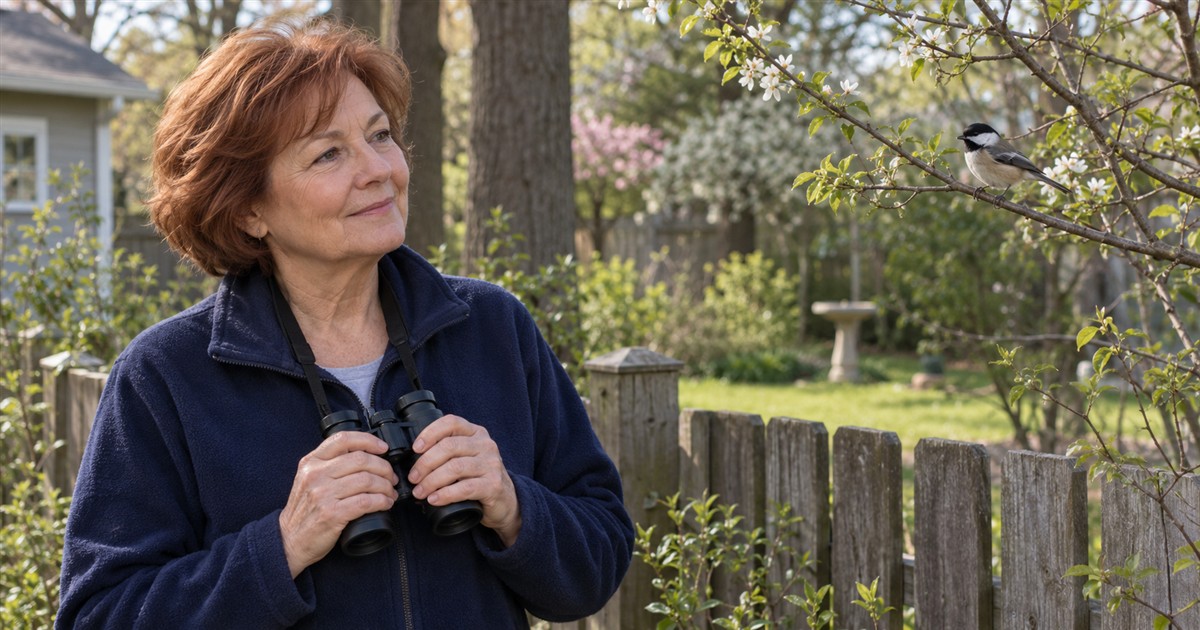
Watch from a respectful distance and avoid disturbing birds or nests. Use binoculars or a zoom view rather than pursuing a closer encounter. Follow the rules of the place you are visiting.
The National Park Service’s wildlife-viewing guidance advises using viewing equipment from a safe distance and not bringing animal calls or food to feed wildlife in national parks. A reflective practice should not require a bird to change its natural behavior.
Keep decisions and privacy grounded
A sighting cannot establish another person’s feelings, identify a health condition or guarantee money or a relationship. If you choose to discuss an experience in a reading, ask a question about your own interpretation rather than requesting certainty about someone else.
The reading-request privacy guide helps you limit unnecessary details. The spirit-guide reflection article also explains why questioning an impression is appropriate.
If seeking signs starts to feel compulsory or worrying, stop the exercise. You do not owe anyone payment to decode a bird or remove danger supposedly announced by one. Review pressure and scam warning signs when a service tries to turn uncertainty into urgency.
Frequently Asked Questions
1. Does seeing a bird mean a spirit guide contacted me?
That is a possible personal interpretation, not an established explanation of the sighting. You can enjoy the moment without declaring that a message was sent.
2. Why might I keep seeing the same kind of bird?
Consider the place, time of year and ordinary bird activity. Repeated sightings do not by themselves establish supernatural contact or a prediction.
3. Do birds have one universal spiritual meaning?
No. Interpretations differ across people, stories and traditions. The prompts here are optional reflection questions, not a universal dictionary.
4. Does an owl mean someone will betray me?
No. An owl sighting is not evidence of another person’s intentions. Do not accuse someone or make a relationship decision on that basis.
5. Does a hummingbird guarantee joy or good news?
No. You may choose to associate a hummingbird with a pleasant moment, but the sighting does not promise a future event.
6. Does a hawk prove I am meant to be a leader?
No. You can use the image as a prompt to consider priorities, but leadership and decisions should be assessed through actual responsibilities and actions.
7. What could I reflect on after seeing a crow?
You might ask which assumption deserves checking. This is an original optional prompt, not a claim that crows are tricking people or delivering hidden information.
8. What does an eagle sighting tell me about balance?
It does not establish a message about your life. If you like the symbolism, ask whether a wider view would help you assess a current task.
9. Must a canary be yellow to have meaning?
Personal meaning does not depend on a required color. Use an association only if it helps you reflect, and do not treat it as a prediction or bird-identification rule.
10. How can I identify an unfamiliar bird?
Note size and shape, color pattern, behavior and habitat, then consult a suitable bird guide. If the view was poor, leave the identification uncertain.
11. What should I write in a bird-sighting journal?
Separate what you observed, what you personally associated with it and any practical action you choose. Avoid recording an interpretation as a confirmed instruction.
12. Should I approach a bird to ask for a sign?
No. Keep a respectful distance and do not chase or disturb it, especially around nests. Follow local site rules rather than trying to create a closer encounter.
13. Can I use calls or food to make a message appear?
Do not manipulate wildlife to obtain a supposed sign. National Park Service guidance advises leaving animal calls and food for wildlife out of park viewing activities.
14. Can a bird confirm what another person is thinking?
No. A sighting does not give you access to private feelings or replace a respectful conversation. Keep decisions grounded in information and consent.
15. What if interpreting signs makes me worried?
Pause the interpretation and return to ordinary observations or another activity. If worry persists or affects daily life, seek appropriate support rather than paying for certainty.
I appreciate the detailed explanation of what each bird symbolizes. It provides a good framework for contemplating the presence of these animals in our lives.
The concept of a spirit animal is intriguing. It seems to combine elements of spirituality and psychology, offering deeper insight into one’s own life.
While the notion of spirit animals might not be scientifically validated, it can certainly be a useful metaphor for self-reflection and personal growth.
It’s fascinating how different cultures interpret the symbolism of various animals. The descriptions here seem to align well with many traditional beliefs.
The idea that animals can provide guidance is not new, but this article provides a fresh perspective by linking specific characteristics to individual animals. It’s thought-provoking.